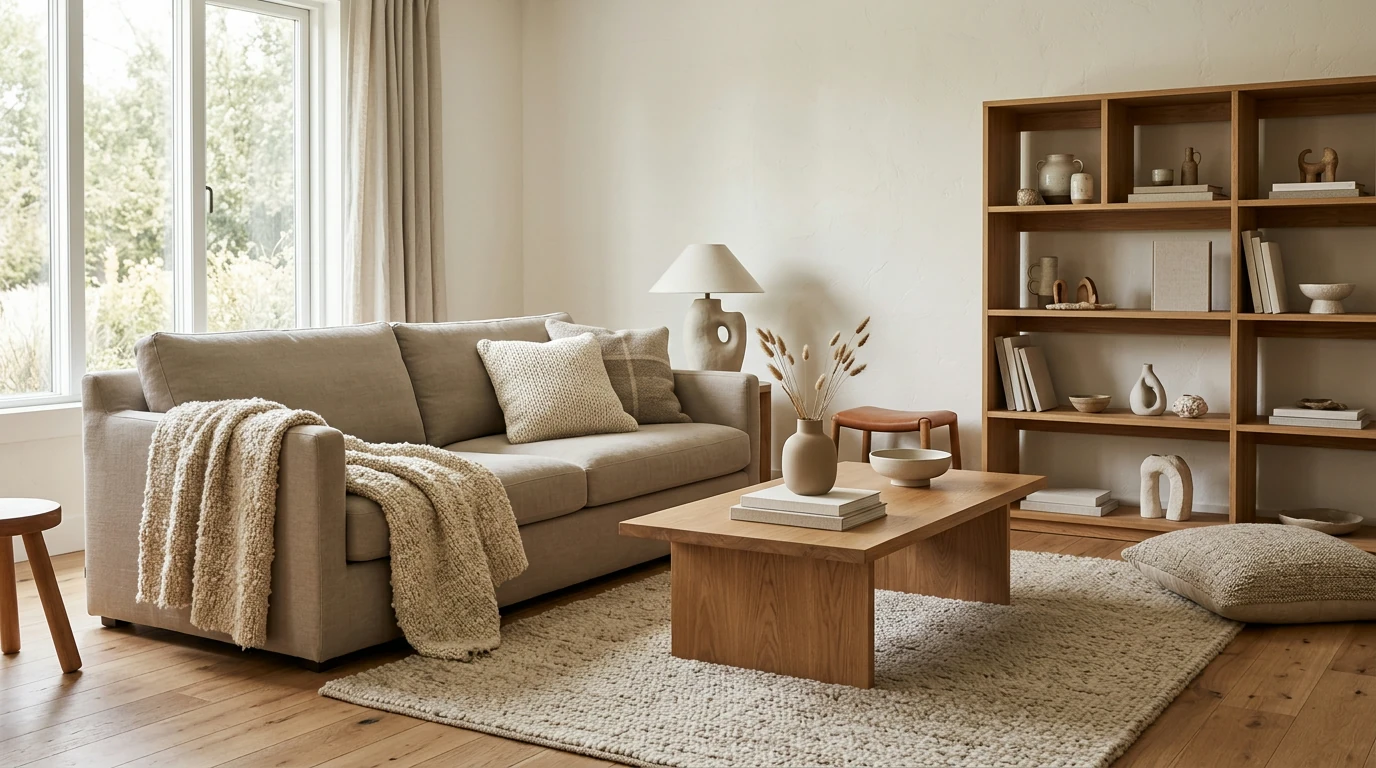
A room can feel rich and expressive without a crowded color palette. The secret is to give the eye—and the hand—a variety of surfaces to notice: a nubby textile, a smooth tabletop, a soft rug, or a structured shelf. Even a few thoughtful contrasts can make a familiar space feel more inviting.
Our Bold Texture Layering in Decor Checklist is an accessible digital home styling guide to support your planning. At $2.99, it offers a starting point for a modern room makeover, whether you’re refreshing one corner or reconsidering the whole space.
Before adding anything, take stock of the textures already in your room. Look down at the flooring and up at the walls. Notice whether your upholstery feels smooth or heavily woven, and consider the visual weight of your largest furniture pieces. A wood floor, painted wall, and sleek sofa already provide three different surfaces to work with.
Choose one existing texture as your anchor. It might be the grain of a wood table, the softness of a sofa, or the pattern of a woven rug. Let that element set the tone, then choose a limited palette that complements it. Two or three main colors, plus a small accent color, can make a mix of materials feel intentional rather than scattered.
Our checklist can support that planning process as you decide what to keep, what to move, and where another layer might make the most difference. You don’t need to replace everything to create a noticeable change.
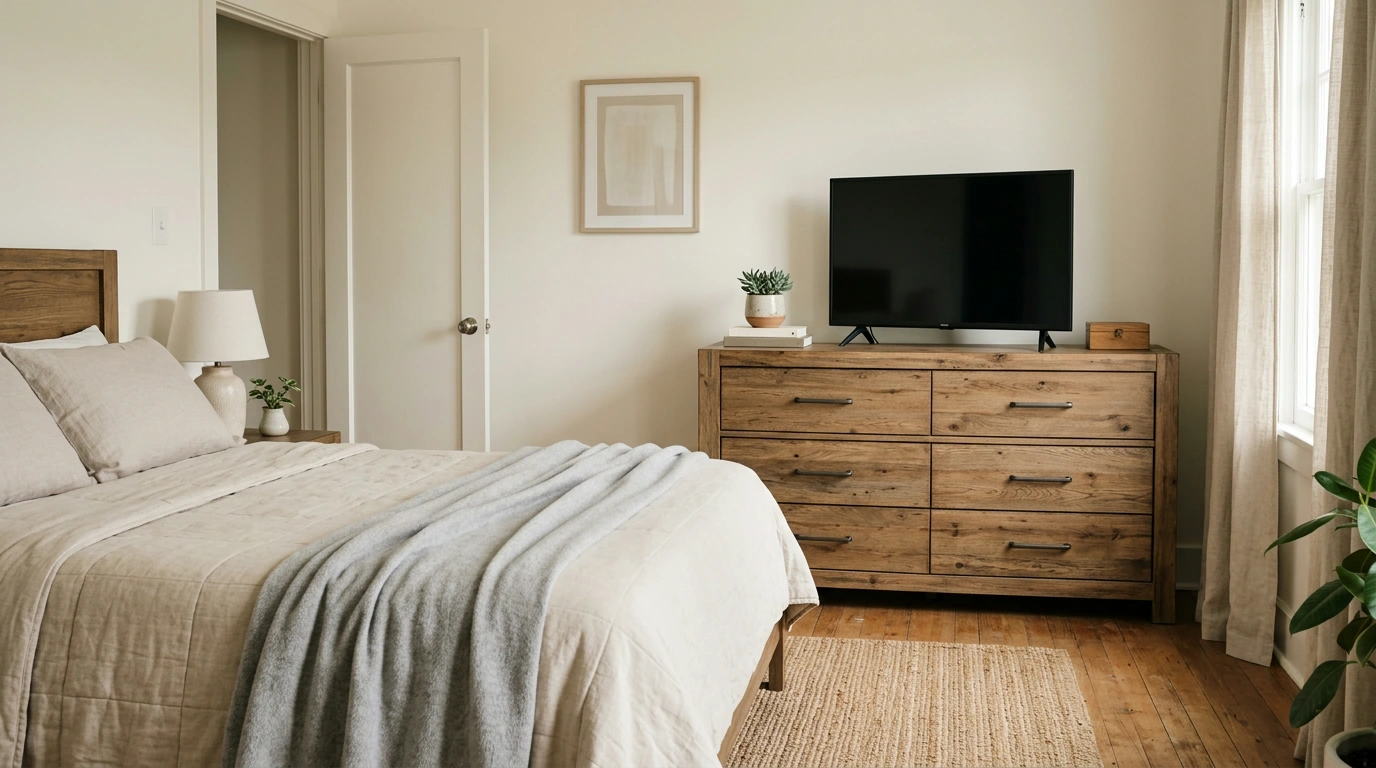
Texture is most effective when different surfaces have room to play off one another. Smooth upholstery can make a woven throw look more tactile; a soft rug can temper the crisp outline of a clean-lined table. Rough, soft, smooth, and structured elements can sit comfortably together when they share a color family or repeat a similar visual rhythm.
Use the pairings below as starting points, not rules. Your room’s existing materials should guide what you add, and an appealing combination can be as simple as moving a throw or tray you already own.
| Starting surface | Contrasting layer | Styling idea |
|---|---|---|
| Smooth upholstery | Woven textile | Drape a throw over one arm of a sofa |
| Clean-lined furniture | Soft rug | Place a rug beneath the seating area |
| Tufted upholstery | Smooth accent | Pair an ottoman with a simple tray |
| Steel shelving | Books and woven accents | Alternate practical storage with softer objects |
For more design inspiration, explore the collections and resources from Cooper Hewitt, Smithsonian Design Museum. Notice how materials and forms interact, then translate the ideas into combinations that suit the way you live.
Start by arranging your main furniture around the room’s purpose. If conversation is the priority, position seating so people can comfortably face one another. Leave clear paths through the space before introducing smaller pieces.
Next, add a rug to give the seating area a visual foundation. Choose one that works with the furniture arrangement rather than treating it as an isolated accent. A softer surface can balance structured furniture, while a subtle weave or pattern adds interest without demanding another bold color.
Layer in textiles once the larger pieces are settled. Try a woven throw over a sofa arm, then add one or two pillows with a different surface quality. A smooth pillow next to a nubby one creates contrast even when both are similar in color. Step back between additions so you can see whether the room needs another layer or simply needs space to breathe.
For an optional tactile focal point, our Tufted Square Storage Ottoman Bench & Coffee Table brings tufting and storage to the seating area. A simple smooth tray can balance the upholstered surface and give smaller items a defined place. Allow enough clearance around the ottoman for people to move comfortably.
Finish with a few accents that bring in another material or shape. Our Modern Minimalist Steel Bookshelf provides a structured counterpoint to books and softer decorative objects. Alternate practical storage with a woven accent or a small grouping of books, leaving some open space so the shelves don’t feel crowded.
Once your layers are in place, look for a connection between them. Repeating a color from a throw in a small decorative object, or echoing a woven texture elsewhere in the room, helps the arrangement feel cohesive. Repetition doesn’t mean matching everything; a subtle reminder in more than one spot is often enough.
Then remove an item or two. A clear tabletop or an open section of shelving gives tactile details more presence and keeps everyday surfaces useful. Live with the arrangement for a few days and adjust anything that interrupts your routine.
Ready to plan your next refresh? Shop our Bold Texture Layering in Decor Checklist and use it as you bring your ideas together.
Start with a restrained color palette, vary the surfaces within it, and leave open space between accents. Repeat a color or texture in a few places to connect the room.
Yes. Pair a few contrasting materials in similar tones to add depth while keeping the room visually calm.
It is a digital download offered as a home styling guide for interior design and room makeover ideas.









Leave a comment